Sports scholarship in the USA: how to get one
Sports scholarship in the USA: what it is, who awards them (NCAA, NAIA, NJCAA), how to get one as an international athlete, and the honest truth about who it is for.
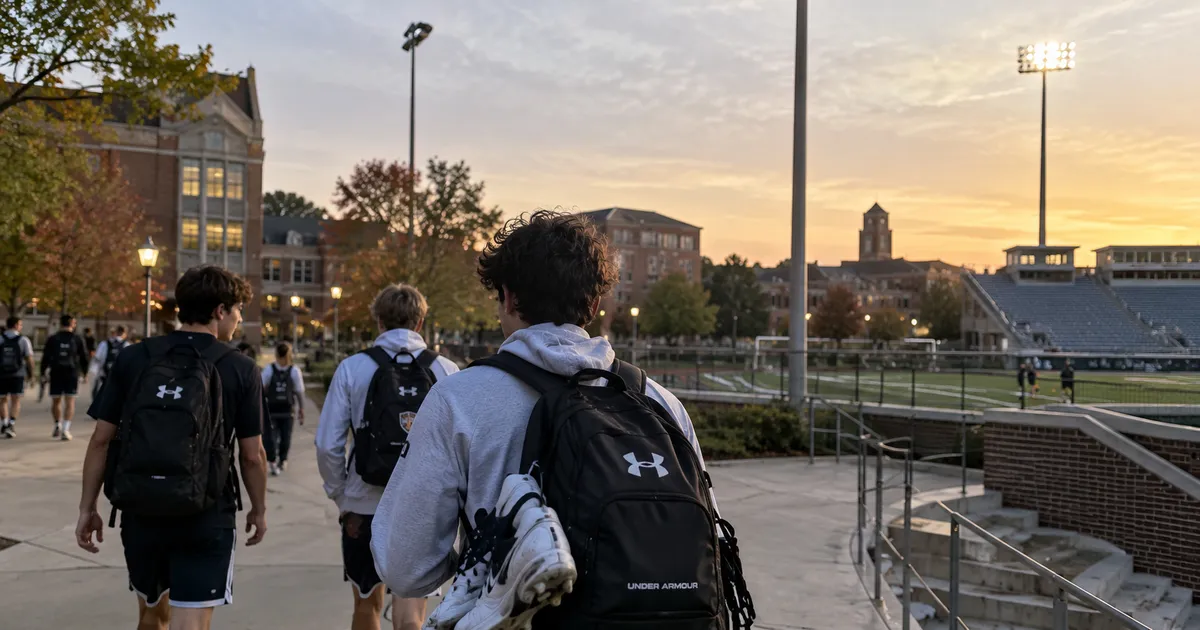
A kid who stands out in their sport, and parents who keep hearing that in the United States there are universities that pay for your studies in exchange for competing. It sounds almost too good, and in part it is, though the path has more small print than people let on.
This guide explains what a sports scholarship in the USA is, who awards them, how to get one as an international athlete and, above all, the part the agency websites skip: who this path genuinely makes sense for, and who it doesn’t.
What a sports scholarship in the USA is
A USA athletic scholarship is aid that an American university gives an athlete so they can study and compete for its teams. In exchange for representing the university, the athlete gets part or all of the cost covered.
It helps to understand that they aren’t all the same:
- Full ride. Covers tuition, on-campus housing, a meal plan and, often, textbooks. These are the fewest, and the most fought over.
- Partial scholarship. Covers only part of the cost. It is, by far, the most common. The “they pay for everything” picture holds true in few cases.
In other words, “scholarship” doesn’t always mean free. It means aid, and its size varies enormously by sport, by university and by the division the athlete competes in.
NCAA, NAIA and NJCAA: who awards the scholarships
US college sport is run by three organisations, and knowing which one you fit is half the battle when you’re after sports scholarships in the USA:
| Organisation | What it is | Athletic scholarships | For whom |
|---|---|---|---|
| NCAA Division I | The big, most competitive universities | Yes | High sporting level, very demanding |
| NCAA Division II | Mid-sized universities, good level | Yes | A balance of sport and studies |
| NCAA Division III | Academically focused institutions | No athletic (academic or need-based aid, yes) | Studies come first |
| NAIA | A set of smaller universities | Yes | More accessible for internationals, less paperwork |
| NJCAA | Community colleges (two years) | Yes | A way in if the academic record is weak |
Two important nuances. NCAA Division III awards no athletic scholarships, only academic or need-based aid. And the NAIA tends to be more manageable for an international athlete, with less regulation than the NCAA. The NJCAA, the two-year colleges, is the classic back door for anyone who needs to strengthen their record before making the jump.
How to get a sports scholarship in the USA
How to get a sports scholarship in the USA isn’t a single formality, it’s a multi-step process that starts a year or two in advance:
- Prepare your sporting profile. A highlight reel of your best plays, your marks or stats and your competition calendar. It’s your calling card with the coaches.
- Contact the coaches. You send the first email, you don’t wait to be discovered. Coaches at universities realistic for your level, not just the big ones.
- Register with the NCAA Eligibility Center (or the NAIA equivalent). It’s the body that certifies you meet the academic and amateurism requirements before you can compete. Check your documentation on the NCAA’s official page for international students.
- Gather the academic record. Grades from year nine onwards, translated into English, plus proof of graduation. The equivalences are validated by the Eligibility Center itself.
- Sit the tests they ask for. Usually an English test (such as TOEFL or Duolingo) and, depending on the university, the SAT or ACT. Always confirm the current requirements with each institution, because they change.
- Negotiate and sign. If there’s an offer, the scholarship percentage is set and the relevant agreement is signed. This is where “scholarship” turns into a concrete figure, which is rarely 100%.
The honest part: who this path is for
Here’s what almost no commercial guide will tell you, because it lives off selling the dream. The sports scholarship in the USA is real, but it’s a narrow path, expensive to prepare, and for a high sporting level.
For every athlete who leaves for the United States on a scholarship, there are hundreds who spent time and money trying and fell short along the way.
Preparing the profile, the tests, the translations and, sometimes, an agency costs money up front, with no guaranteed return. Most scholarships are partial, so even when it goes well the family usually pays a share. And the level for a scholarship worth having in Division I or II is, genuinely, very high.
None of this is to put off anyone who has the level and the drive. It’s so the family goes in with eyes open: it’s an extraordinary opportunity for a few, not a funding plan for the majority. If what you’re after is aid closer to home, the path is a different one, and we cover it in sports scholarships.
And meanwhile, sport still costs money here
Scholarship or no scholarship, one part doesn’t change: until that jump arrives (and for the vast majority who never go this route), sport is paid for at the same old club. Fees, registrations, travel, gear. That’s now, every month, and it’s exactly where Esportik helps.
When an athlete’s or a club’s circle buys their everyday things at a partner store through Esportik, the store pays a commission that comes back directed to that athlete or club, at the same price and no extra cost. We explain it in what is cashback, and how it holds up the day-to-day, in support your club. For the whole career, from grassroots to the jump, all the routes are in ways to finance a football career.
Frequently asked questions
Can you get a USA sports scholarship as a Spaniard? Yes. Spanish athletes do it every year. You register as an international student with the relevant body (NCAA or NAIA), which validates the Spanish academic record and its equivalence.
Do scholarships cover the whole cost? Few do. The full ride exists, but it’s a minority. Most are partial, so it’s worth working out how much the family would have to put in even with a scholarship.
Which route is more accessible for an international? The NAIA usually has less paperwork than the NCAA, and community colleges (NJCAA) are a common entry point for strengthening the record before jumping to a four-year university.
How far in advance should you start? Usually one or two years ahead, to allow time for the video, the tests, the translated paperwork and contacting coaches.
A path for a few, sport for everyone
The sports scholarship in the USA can change the life of an athlete with just the right level. But while that case is being decided, grassroots sport still needs someone to pay this month’s fee.
Create or support a profile among the available profiles and help make sure no kid has to quit sport long before they could even dream of a scholarship.