The best ways to finance a football career
From sponsors and fundraising to family sacrifice, the classic ways players fund their football, and how Esportik adds a steady source that costs nobody a thing.
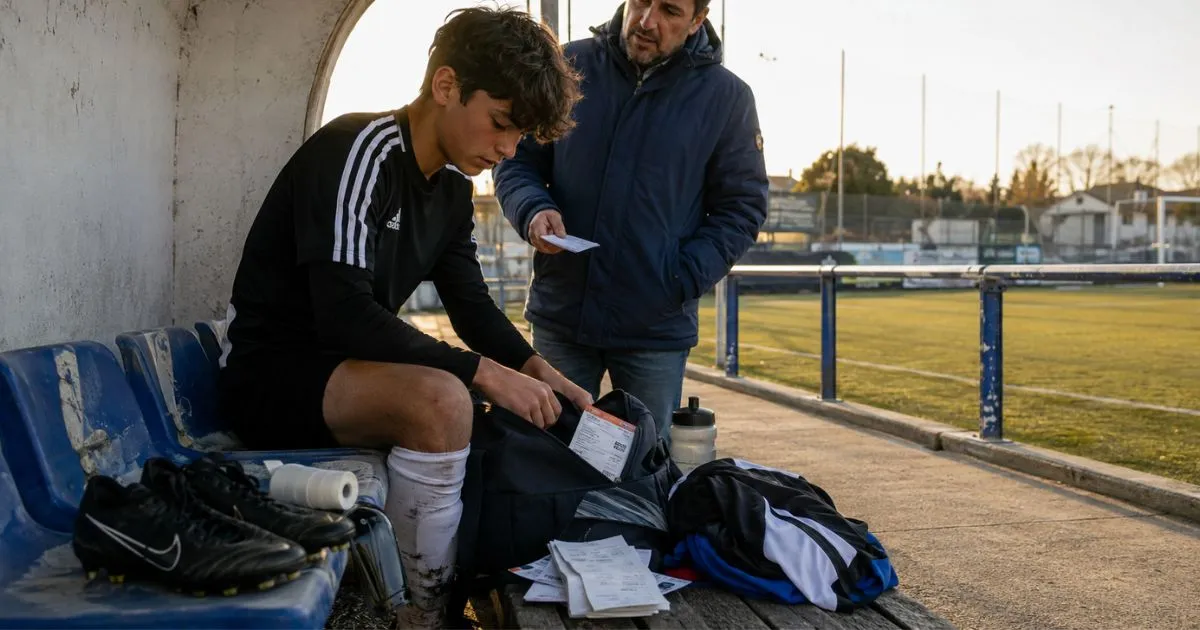
A football career is expensive long before anyone gets paid to play. The years that decide whether a player makes it, roughly ages eight to eighteen, are pure outflow: travel, coaching, kit, tournaments, time off work for the parents driving to every game. Plenty of talent never gets the chance simply because the money runs out first. So how do families and clubs actually pay for it? Here are the classic routes, what each is good for, and where they fall short.
The traditional routes
Family money. The oldest method and still the most common. Parents absorb the cost out of their own pocket: petrol, fees, boots, weekends given up. It works until it doesn’t, and it quietly filters out gifted kids whose families simply can’t sustain years of spending.
Local sponsors. The sign on the hoarding, the company name on the shirt. A local business chips in for visibility. Genuinely useful, but it leans on having the right contacts, it’s usually a fixed annual sum, and in a tight year the sponsorship budget is the first thing a business cuts. How to land them, step by step, is in sports sponsorship.
Fundraising. Raffles, car washes, bake sales, the meat draw, sponsored runs. The reliable engine of grassroots sport, and great for the community spirit it builds. The catch is that it’s enormous work for the volunteers running it, and the return is lumpy: a big push, then nothing until the next one.
Grants and bursaries. Federations, councils and foundations sometimes offer support. Real money when it lands, but the applications are slow, competitive, and never guaranteed. You can’t plan a season around a grant you might not get. Which ones exist and who they’re for is in sports scholarships.
Crowdfunding. A modern twist on passing the hat, online. It can work for a specific, time-limited goal (a trip to a tournament abroad, say), but it depends on a compelling story and a network to share it, and it’s a one-off, not a season-long income.
Each of these has its place. What none of them solve is the everyday, year-round trickle of costs, the bit that never stops and never makes a good fundraising poster.
Where Esportik fits
Esportik adds a route the others don’t cover: a steady source of funding that costs nobody anything extra. It runs on cashback, the commission a store pays when someone reaches it through Esportik and buys something they were going to buy anyway.
The mechanics are simple:
- Supporters shop through Esportik at the usual partner stores, same prices.
- The store pays a commission for the referral.
- That commission becomes cashback, directed to the player or club.
No raffle to organise, no sponsor to chase, no application to fill in. 5/10 families each sending a few euros of cashback a month quietly outperforms most raffles, and it keeps coming, month after month, without anyone spending more than they already do.
The strength of cashback isn’t one big donation. It’s many people contributing a little, consistently, from shopping that was happening regardless.
Best used together
This isn’t about replacing the old methods. The sponsor still puts their name on the shirt, the raffle still brings the club together, the family still backs their kid. Esportik sits underneath all of it as the steady baseline, the income that covers the constant costs while the big efforts handle the big moments.
That combination, occasional pushes on top of a dependable monthly base, is what turns “we’ll see if we can afford it” into a plan. Choose a player or club to support among the available profiles and start building that baseline today.