Sports crowdfunding: how it works
What sports crowdfunding is, how it works step by step in football, padel and individual sports, and how to combine it with sports cashback to fund a whole season.
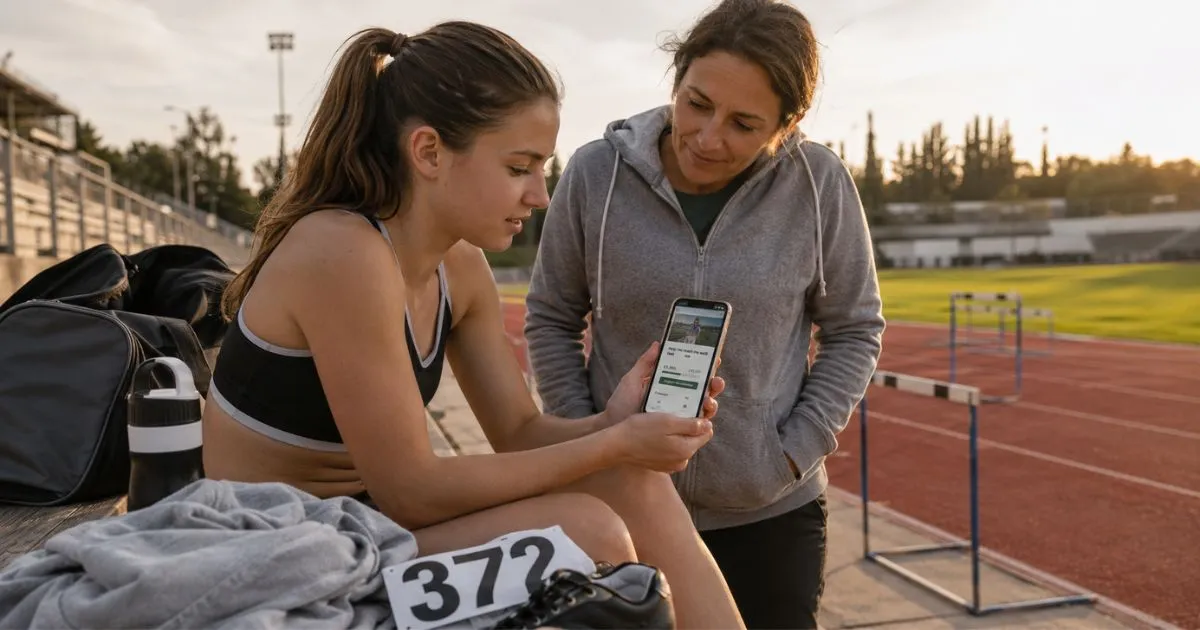
Every club and every athlete reaches the same point sooner or later: there’s a specific cost on the table (an away tournament, a set of kits, a physio for half a season) and no budget to cover it. Sports crowdfunding is the most direct answer to that problem: instead of hunting for one big sponsor to put up all the money, you ask a lot of people to put up a little each.
It sounds simple, and fundamentally it is. But it works far better once you understand what makes a campaign hit its target and what leaves it stranded halfway. Let’s break it down.
What sports crowdfunding actually is
Classic crowdfunding is collective financing: a person or a project posts a financial goal, explains what the money is for, and their community chips in until it’s covered. Sports crowdfunding applies that same idea to grassroots and semi-professional sport, where the money almost never comes from contracts but from families, members, neighbours and fans.
There’s one important difference from crowdfunding a product or a startup: here there’s no physical reward to justify the contribution. Nobody gets a gadget. What the contributor gets is belonging, the genuine sense that the player walking out to compete on Sunday is out there partly because of them. That’s the currency crowdfunding for athletes runs on, and it’s much stronger than it looks.
How it works, step by step
A well-built sports crowdfunding campaign always has the same five pieces:
- A specific goal with a number. “Help us with club costs” raises nothing. “€1,400 for the under-16s’ trip to the Valencia tournament” does. People give to things they can picture.
- A credible breakdown. Coach, accommodation, entry fees, meals. When contributors can see where their money goes, they give more and hesitate less.
- A deadline. No deadline, no urgency, and without urgency people leave it for later and never come back. Four to six weeks is usually the sweet spot.
- A story and a face. Who the player is, what they’re trying to achieve, why it matters. Real photos and video, not generic copy.
- Sustained promotion. Most campaigns die not from lack of interest, but because they get posted once and never mentioned again.
The fundraising pattern is nearly always the same: a strong initial spike (the inner circle), a long boring plateau in the middle, and a second spike at the end when you announce there are three days left. That plateau is normal. What sinks campaigns is reading it as failure and going quiet.
Football and padel: two different scenarios
Football crowdfunding. In football, crowdfunding is usually collective: the team, the academy, the club. There’s a huge advantage, which is the supporter base (even a modest club can have hundreds of families attached), and a risk, which is diffusion: if everyone assumes someone else will chip in, nobody does. The football campaigns that work are the ones that segment: each age group raises for its own thing, with its own goal and its own parents pushing it.
Padel crowdfunding. Padel is the opposite case, and for that reason one of the sports where this model fits best. The costs are individual or per pair, and they’re constant: tournament entries, travel almost every weekend, rackets that last as long as they last, coaching. A player competing on the circuit can spend several thousand euros a year before winning a single prize. The community, though, is close and very loyal: the club where they train, their court partners, the people who watch them play every week. That profile (high spend, mid-sized but deeply invested network) is exactly where crowdfunding for athletes performs best.
In what can be financed we break down the real costs of a season, which is the best starting point for setting your campaign goal.
The limit of crowdfunding
Here it’s worth being honest, because nobody says it: crowdfunding is one-off by design. It raises a lump sum for one specific thing, and then it’s over. And it runs on the goodwill of your network, which isn’t infinite. You can ask the same people once a year, maybe twice. By the third time, the campaign returns half.
The problem is that sporting costs aren’t one-off. They’re a constant twelve-month trickle: fees, petrol, gear that breaks, next month’s entry fee. Crowdfunding covers the peaks. It doesn’t cover the baseline.
Crowdfunding solves the peak. What almost nobody has solved is the baseline: the every-month spending that never justifies a campaign.
Sports cashback: the baseline underneath the campaign
This is where Esportik comes in, and it’s the part that makes the two things complement each other rather than compete.
Sports cashback runs on a different mechanism: it asks nobody for money. When a supporter reaches a partner store through Esportik and buys something they were going to buy anyway, the store pays a commission for the referral. That commission becomes cashback, directed to the athlete or club that supporter chose. Same price, same purchase, no extra cost. We explain it in detail in what is cashback.
The practical difference from crowdfunding is consistency. A campaign gives you €1,400 over six weeks and then stops. Fifty supporters buying what they always buy give you income every single month, without anyone having to decide each time whether to contribute. It’s less dramatic and far more sustainable.
And there’s a side effect that matters: because cashback costs the supporter nothing, it doesn’t burn the goodwill you spend every time you launch a campaign. When you genuinely need to ask for money, your network is still intact.
How to combine the two
The strategy that works best isn’t choosing, it’s stacking:
- Sports cashback as the baseline. Turn it on first and leave it running all year. It covers the constant spending and needs no ongoing effort.
- Campaigns for the peaks. When a big, dated cost appears (an international tournament, surgery, a new set of kits), launch a campaign with a goal, a breakdown and a deadline.
- The same supporters for both. Whoever already backs you by shopping is the most likely to give when you ask. The baseline builds your list.
That order matters. A club that starts with cashback reaches its first campaign with a community already switched on; one that starts with the campaign reaches the following month with nothing.
If you want to see how this applies from the club’s side, support your club covers that perspective, and ways to finance a football career compares every route available. For loose ends, the frequently asked questions cover most of them.
Start with the baseline
Sports crowdfunding is an excellent tool, but it’s a push. What turns a season into something you can actually plan is having income underneath that doesn’t depend on asking again.
Choose who to support among the available profiles or create your own for free, and start building that baseline today. Your next campaign will go much better for it.