How to organise a team trip with your sports club
A guide to organising a team trip to a tournament: dates, transport, accommodation, permissions, and the genuinely hard part, how to fund the team trip.
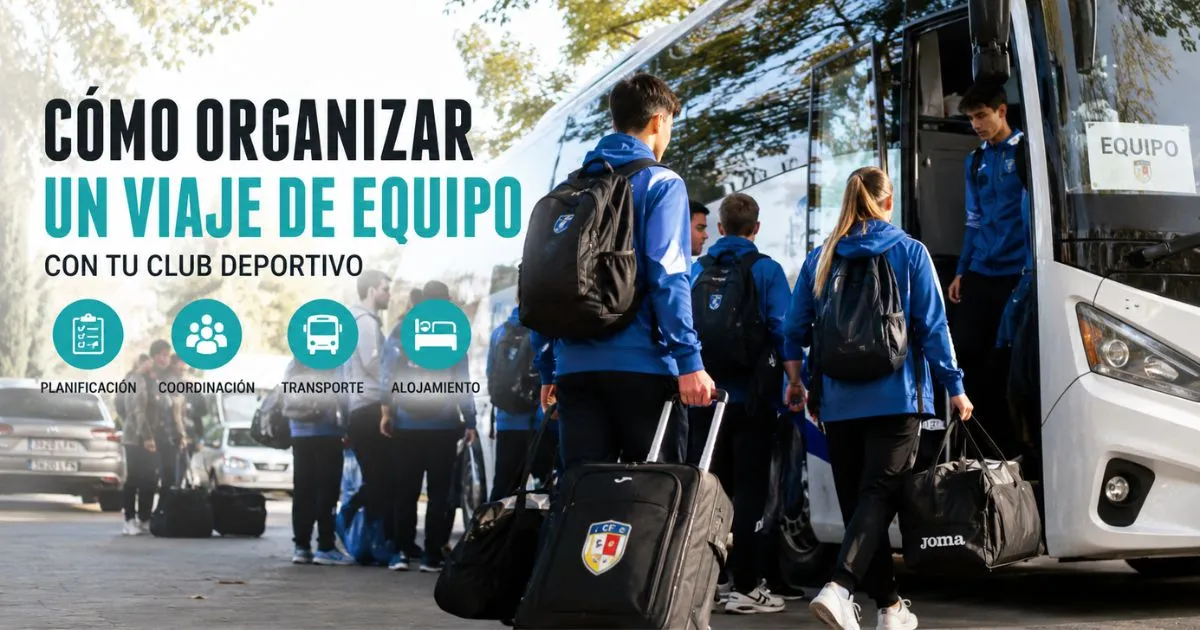
Few things pull a team together like a trip away. A tournament a few hours from home, a full coach, two nights away, and suddenly the kids who only saw each other at training are a proper group. That’s why it’s worth doing, and why it’s worth organising a team trip properly rather than at the last minute.
The good news is that almost all of it comes down to a checklist and some notice. The less good news is that there’s one pillar no checklist fixes, and it’s the exact one that leaves a kid at home. Let’s take both parts.
Start with the dates and the logistics
Before you book anything, set the frame. A badly planned football team trip almost always fails here, not in the details:
- The real date, not the ideal one. Cross-check the fixture list, exams and bank holidays. An end-of-season trip competes with a thousand family plans. The sooner you lock the weekend, the more people can come.
- How many are going. Players, coaching staff, and decide early whether families come too. The number changes everything: coach or minibuses, how many rooms, what budget.
- One person in charge. Someone who centralises (not a WhatsApp group deciding by consensus). Delegate tasks, but keep a single name people ask.
Transport, accommodation and meals
The bulk of the cost and the logistics lives in these three:
- Transport. To travel to a tournament with the squad, a coach usually works out better than several cars once you’re more than twelve, and it avoids parents driving after a match. Get quotes weeks ahead.
- Accommodation. Look for accommodation for sports teams: hostels and hotels that work with groups tend to give a fixed rate, kitchen access, and a flexibility with noise and timings a normal hotel won’t. Book as soon as you have the number.
- Meals. Decide the model before you leave: full board, half board, or self-catering. With kids, eating at set times and avoiding experiments on match day saves more than one upset.
The budget and the permissions
This is where a trip gets serious. Write a team trip budget down, per head: add transport, accommodation, meals, tournament entry, and a 10% cushion for the unexpected, then divide it among those going. Give every family the exact figure as early as you can.
And don’t skip the paperwork, especially with minors:
- Signed parent or guardian consent for each player.
- Insurance covering the travel and the activity.
- Health card and a sheet with each kid’s allergies or medication.
- Enough responsible adults per number of minors.
This is the boring part nobody remembers until it’s needed. Put it on the list and tick it off like any other task.
The part no checklist solves: paying for it
Here’s the knot. You can have the coach, the hotel and the permissions perfect, and the trip still falls through for the kid whose family is short that month. Logistics are solved by organisation; money isn’t.
What leaves a player at home is rarely the trip’s organisation. It’s the bill, which arrives all at once and lands hardest on whoever can least absorb it.
And the money problem has an awkward shape: it shows up whole, with a deadline, on top of the usual fees and gear. Asking families again and again wears thin, and raffles return what they return. So it pays to have the funding sorted before the tournament appears on the calendar, not the week you’re booking.
How to fund the team trip
The most sustainable way to fund a team trip isn’t asking for more, it’s raising a baseline all year, without anyone spending extra. That’s cashback.
When the club’s families shop for their everyday things through an Esportik partner store, the store pays a commission and that commission comes back as cashback directed to the club. Same price, same purchase. We explain it in full in what is cashback, and the maths of how it adds up is in support your club: thirty families with a few euros a month raise far more than it sounds.
For the trip’s specific peak, add a campaign with a goal and a deadline, which is exactly what sports crowdfunding is for. Travel, in fact, is the cost that empties a budget fastest, as we cover in what can be financed, so it’s the first place cashback makes a difference. For the full picture of routes, see ways to finance a football career.
None of these tools books the coach for you. What they do is make sure that, when the bill lands, it isn’t the reason someone stays behind.
Start early
Organising the trip is the part that goes well if you give it a checklist and some notice. Funding it is the part that goes well if you start long before the tournament, not when it’s already on top of you.
Choose your club or create its profile among the available profiles and start building the fund today, so the next trip is decided by who wants to go, not by who can pay for it.